The lack of blogging activity over the past three weeks hasn't been because of lack of activity.
The same week as my Daily Herald finale, BYU had its graduation ceremonies. Even though Erin and I both graduated in December, we wanted to participate in the ceremonies. We were in town anyway, staying in Provo while I worked and while we decided where we would be heading after leaving Provo. And, even though we already had our diplomas framed and everything, it was still nice to have some more formal recognition.
Both of our families came to Utah to see us and celebrate with us. On Thursday we had commencement, which was a gathering in the Marriott Center for all of the graduates. Elder Dallin H. Oaks spoke. Then on Friday we divided by colleges for our individual convocations. Even though Erin graduated with a major in family studies, she joined me at my communications convocation. I loved having her with me (and I'm sure our families appreciated not having to go to two convocations!).
1) When Erin's name was called, it was mispronounced. Even with phonetic instructions on the name card, it was messed up.
And, 2) there was no recognition of the existence of The Daily Universe. I'm not saying The Daily Universe is the end all be all of the BYU Department of Communications. But I never understood why the newspaper is treated like an afterthought when it should be treated like a flagship. I'm sure most of the parents and alumni there remember The Daily Universe from their BYU days, more than the Ad Lab or BYU Eleven News. (Maybe I'm just jealous that I didn't get to speak at convocation, haha.) Anyway, it brought up some of the emotions I had when I wrote this post back in January.
But, all in all, it was fun to be a part of graduation.
So that was just one big event in our family that week. We also moved out of our apartment, which was a bigger task than I imagined. We did it in stages, which was nice. We moved some big stuff a month earlier, most of our stuff when Erin's dad and brothers and their big muscles were in town, and the rest of it when it was time for the landlord to prepare the place for new tenants.
But at the same time, it seemed like it would never end. I was working, and so I didn't actually do a whole lot of packing or cleaning. Which makes Erin the hero for getting all of it done.
What we came up with for our plan to transition from Provo to Iowa City was to store most of our things at Erin's grandparents' place in West Valley. And then we stayed there for about a week and a half, while I worked at my other job making money right up until the bitter end of living in Utah, and while Erin waited for Jamie's homecoming from her mission in Peru.
Then, we drove from West Valley to Erin's family's house in Tomball, Texas. This will be "base camp" for a couple of months. We still haven't been to Iowa to look for a place to live, and it will be easier to do that from here, where we don't pay rent and where I don't have to ask for time off work. Plus, between Erin and I we have three siblings graduating from either high school or college, and it will be nice to not have to ask for three weekends off in June. I don't highly recommend unemployment, but it does make your schedule more flexible!
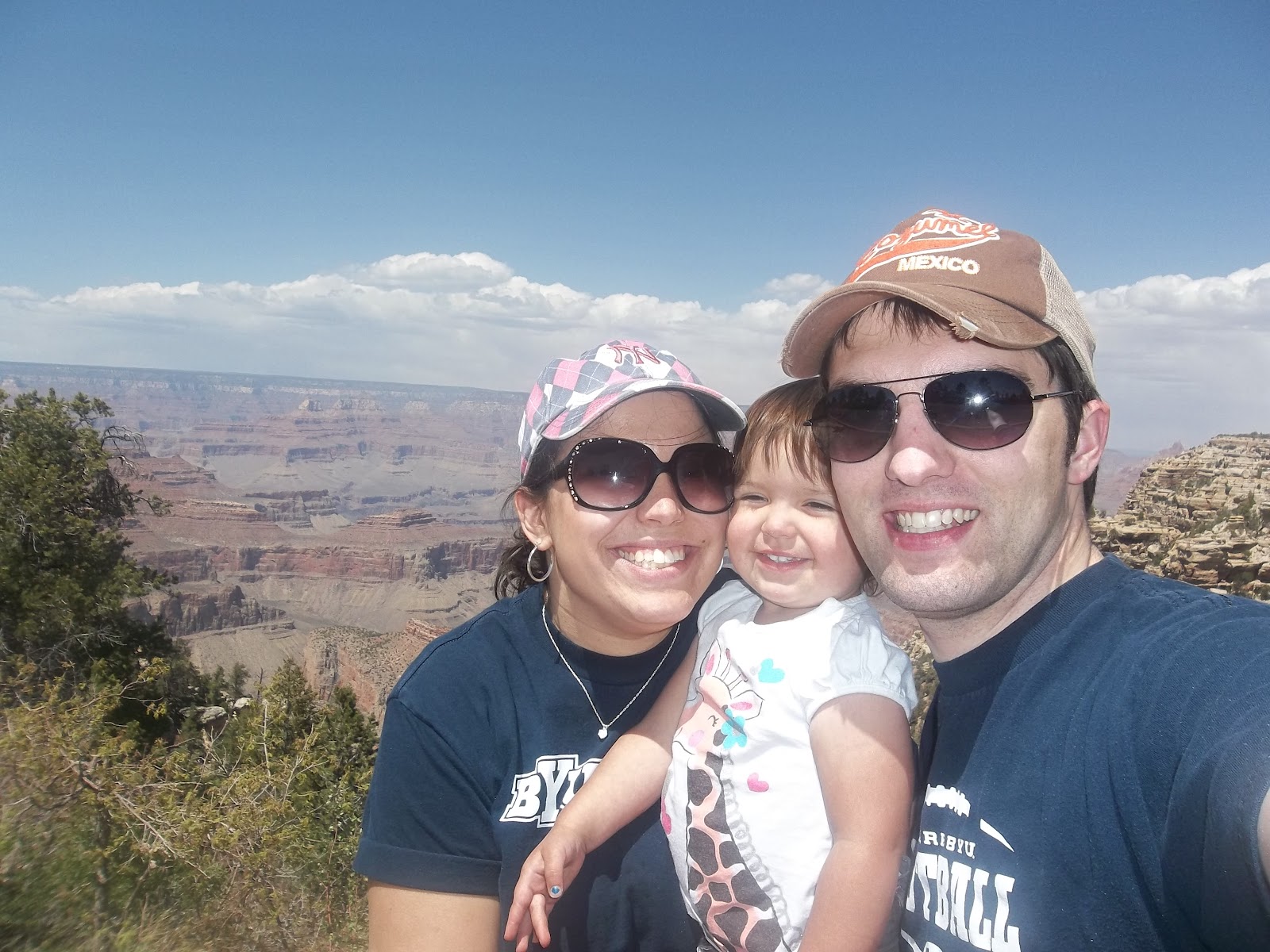
Like we did last summer, we accomplished yet another successful Despain Family Road Trip. (We will have photos on our family blog soon, but I'll post a few here.)
After going to church with our ward in Provo one last time, we spent Sunday night at a hotel in Page, AZ. We first tried getting there via Highway 14 from Cedar City, but it was closed for some reason. So we instead got there with Highways 59 and 389 through Tocquerville and Hurricane, and still got there before midnight (thanks to Arizona's opting out of Daylight Savings Time). We're pros.
From there we went to the Grand Canyon and spent the morning and early afternoon there.
We wanted to get to Four Corners Monument before it closed, but we weren't sure if we would make it. From the park we had more than 200 miles to go, not on a freeway, and only about 3 1/2 hours to do it. But due to my expert driving, we made it just in time. The lady at the gate even let us in for free since they were almost closed. It meant we didn't get any Navajo tacos or fry bread, but we did get some pictures of us standing in Utah, Arizona, Colorado and New Mexico at the same time. And we got to our motel in Cortez, CO, nice and early.
The next morning we went to Mesa Verde National Park. I was excited about this one, because finally I was taking the well-traveled Erin to somewhere she hadn't been before. For those of you who haven't been there or haven't heard of it, the national park preserves cliff dwellings built by the Anasazi Indians about 800 years ago. You can hike to some of them, but all the stairs and ladders would have been too much for Allisyn. So we went on a driving tour that had some good views.
We spent that night at a motel in Tucumcari, NM. Then, yesterday was spent just driving. We went through Amarillo, Fort Worth and Dallas on our way to Tomball.
In about a week, Erin and I will fly to Iowa and spend a few days there getting to know Iowa City, and we hope to find our new home while we're there. We plan on moving to Iowa with another road trip sometime in July.
A cappella seems to be a big thing in Utah especially. So the headline I suggested was "Utah cappella." Guess it didn't make the cut.
Courtesy of Eclipse
Second, a story on "My Son Pinocchio" playing at the SCERA Center. It's a really interesting play, it's the Pinocchio story from Geppetto's point of view. Everyone I interviewed described the story the same way: "As Pinocchio becomes a real boy, Geppetto becomes a real father."
And, there it is. I really enjoyed working at The Daily Herald. I had a lot of free reign, to work by myself and write stories pretty much however I wanted to. The only thing Doug really changed throughout the semester were typos. I liked that hands-off approach a lot. And I really enjoyed writing about arts and entertainment. It was similar enough to my background that I didn't feel like a fish out of water, but different enough that I learned something new.
Since this is my last week at The Daily Herald, I got another turn writing "The Skinny." Instead of writing about politics this time, I went for something a little broader.
Have you seen the video "It Gets Better at Brigham Young University"?
It's really pretty amazing. I don't know if even five years ago, BYU students who identified themselves as gay would have told anybody, much less a video camera.
After the video, I had all kinds of reactions, thoughts and questions.
1) The first one was the subject of my column: I wonder if this would have been possible without social media, and not just because it was on YouTube and Facebook. I mean, with our generation's inclination to reveal anything and everything online, I think it paved the way for a video like this, and the healing and tolerance it promotes. Of course, saying too much online can backfire (I know from personal experience). But at the same time, when you see others put themselves out there and allow themselves to be vulnerable, especially with a subject like this, you can't help but feel closer to them and want to understand them.
2) Before you reading further, you might want to read elsewhere on my blog to learn more about my philosophy on homosexuality.
If I could have interviewed someone from this video, I would have loved to ask them, "Now what?"
Each of the people in the video related their experience of being introduced to same-sex attraction, trying to fight through it because they understood that attraction was in conflict with everything they had known, becoming overwhelmed with guilt to the point of contemplating suicide, and then being blessed with healing and comfort through the Atonement of Jesus Christ and knowing that God loves them even with this inner struggle.
So, now what? Does that mean they stay in the Church and live the lifestyle it preaches, continue to live the law of chastity, and cope with and deny themselves of those same-sex attractions? Do they go so far as to overcome the attractions to such a degree that they can be married in the temple and partake of all those blessings?
Or do they interpret their new found acceptance a different way? Do they give in and follow the path of those same-sex attractions, therefore denying themselves many of the blessings that come from the restored gospel?
According to my understanding of eternal truth and God's plan for us, that first option would be the correct choice. And I think I can assume that by appearing in an "official" BYU video like this, the people in the video understand what homosexuality truly is, according to the restored gospel, and would choose the first option. But, I would just be curious to learn what happens next.
Of course, no matter what these people choose, I should still have respect, tolerance and even love for them. Whether they remain lifelong members of the Church, or find a same-sex relationship and leave the Church behind, I don't want to judge them.
3) I don't think I had ever realized how common it was for someone struggling with their sexual orientation, especially in the Church, to consider suicide. Of course I had heard plenty of stories of when the inner torment does result in suicide. But I had never put myself in those shoes as much as I did while watching this video.
4) When the people telling their stories in the video talk about the answer to their prayers, the feeling of acceptance and the message God is telling them they're okay even if they're gay, I hope it doesn't get misinterpreted.
I understood it to mean that God loves them unconditionally and perfectly, no matter what struggles or temptations they go through. Not all of us have the same temptations. Some of us may never have a problem with same-sex attraction, but instead have other weaknesses. We are all sinners. And yet God still loves us and will always be there for us. As Elder Holland said in the most recent general conference, "... however late you think you are, however many chances you think you have
missed, however many mistakes you feel you have made or talents you
think you don’t have, or however far from home and family and God you
feel you have traveled, I testify that you have not traveled
beyond the reach of divine love. It is not possible for you to sink
lower than the infinite light of Christ’s Atonement shines."
However, some may think this video means endorsing the idea that homosexuality is just as righteous and congruent with God's ways as heterosexuality, and that it won't be long before God and the Church approve same-sex marriage as merely an alternative to traditional marriage.
I don't think the revelation these people gained was that kind of "okay." God still loves them, and they are still His children. But He still expects them to live the law of chastity, resist temptation and repent if they do make mistakes.
An anonymous blogger who calls himself "(Gay) Mormon Guy" explains this better than I could on his blog:
(By the way, I highly recommend his blog. It seems to be a very accurate take on how one can identify himself as gay and yet reconcile with the Church's doctrine and follow it faithfully.)
5) I'll admit, there were parts of the video that made me feel a little defensive about BYU and the Church. When the text came up about BYU being voted the worst environment for gay students by the Princeton Review, or that until recently students who identified themselves as gay were afraid to do so publicly or else be expelled from the school, it made BYU sound like a horrible villain. Of course, as the video progressed it got to its main point, that "It Gets Better at Brigham Young University." But I'm sure some people will read those statements int he video and have an even stronger conviction that BYU is an intolerant, backwards place.
Though the Church's stance on same-sex marriage will probably always be seen as intolerant and backwards to some (maybe even a majority) of people, I think most people at BYU understand homosexuality in a similar way that I do. I think most people at BYU understand that acting on same-sex attraction and temptations is a sin, but that acting on any temptation is a sin and that we shouldn't shun any particular type of sinner. We are all sinners, and we should be selfless and we should not be quick to judge. I hope anyone, no matter their sexual orientation, will feel welcome among BYU students or church members.
6) That said, the history of understanding homosexuality - or lack thereof - would be unfortunate and even cruel in the context of today. Back when most people thought of homosexuality as either completely appalling and lascivious, the result of a brain malfunction that just needed a little therapy (whether psychoanalytic or electroshock) or advice ("What you need to do is just marry yourself a nice, pretty girl, and this will all go away"), most people at BYU or the Church thought that too.
Fortunately for everybody, understanding has improved and Church leaders and members have become more enlightened on the subject. From the rest of the world's point of view, the Church might seem slow on the uptake. But any step closer to truth and knowledge is a good thing.
It is interesting to me that the understanding what homosexuality is and how it relates to society and spirituality has been a very, very gradual process for the Church (although it seems to be accelerating). For other questions, the Church received almost instantaneous answers that were well ahead of their time. The Word of Wisdom was revealed, in answer to a question, more than 100 years before science caught up and condemned smoking tobacco as hazardous and cancerous. And with the question of priesthood eligibility, the transition from the priesthood being held by only certain races to "all worthy male members of the Church may be ordained to the priesthood without regard for race or color" was practically overnight.
I wonder why, on this issue, the process has been so different. I don't have any theories materialized. Do any of you?
------------------------------
Anyway, those are a few of my thoughts. Whatever your opinion, I hope that the video taught you something like it did for me.
Eyes Lips Eyes is another band that began in Provo (back then it was named Elizabethan Report) and is now in L.A. and beyond. It's good music too, similar to Imagine Dragons in some ways. I especially like their song "Tickle." It's like a mix of Red Hot Chili Peppers and Belle and Sebastian.
My other article is about UVU and their end-of-the-year choir concerts.
Sound Hot Ticket: Merritt raise - A one-time Utah rocker is here again. (This was originally my second story assignment, until the Neon Trees came up.)
Okay, now for the moment you've all been waiting for.
I had a really great interview with Branden Campbell, the bass player for the Neon Trees. Even though the band is about to release their second album, and is getting more and more famous all the time, they are taking the time to do a benefit concert for a school in Utah Valley. The school is a preschool for autistic kids, and Branden's son Connor goes there.
I was really impressed that, even though the band is a pretty big deal right now, he's doing this little gig for his son's preschool. There aren't many bands in Neon Trees' position who would do that. So that was the angle I took with the story. Not just another story about a cool band, but about being in a cool band and being a dad.
The interview was interesting, touching - even emotional. Branden talked to me about the band's success, their new album, his faith (all the band members are members of The Church of Jesus Christ of Latter-day Saints), fatherhood, autism, the music business, even consumerism (I asked him about the trend I've noticed, as well as TIME magazine, of fresh bands like Foster the People, fun., OK Go and Neon Trees appearing in car commercials). And then I got to talk to his wife, Emilie, about some of this as well.
One idea in writing this article that I especially liked with was to start the article not talking about Neon Trees, Branden or Emilie. The first person introduced in the article is Connor. I'm glad I came up with that.
(Unfortunately, I did make a mistake in the article. I said the name of the school was "Big Steps," but it's actually "Giant Steps." I wish I hadn't done that! Now there's this mistake glaring at me whenever I think about the article. Hate when that happens. Sorry to everyone at Giant Steps!)
The interview was so good that I typed up the whole Q and A with the two of them. It was supposed to go on The Daily Herald website, but it's not there yet. I'll put it here instead:
Branden Campbell talked with The Daily Herald between an appearance on “Good Things Utah” and paying some fees for Saturday’s benefit concert.
Q: First I want to ask you about the band in general. It seems like Neon Trees has been everywhere lately, on late night shows and the Buick commercial and all these different things. So what’s it been like lately?
A: It’s been really very fortunate. I know that a lot of bands say that, I guess it’s a cliche for a reason. Because once you get out there and you work so hard, just to get feedback and have people that are interested, it does mean a lot. So for everyone to stay interested the second time around, it goes to show that our hard work was paying off and it wasn’t us riding on fumes from one hit song from two years ago or what have you. Yeah, it’s really cool. Especially [because] the new record hasn’t even come out yet. And so for a lot of the anticipation and excitement that’s on the verge of the album coming out, we’re really stoked for it, because we’re really proud of the record, and I think so many people are going to enjoy it.
Left to right: Elaine Bradley, Branden Campbell, Chris Allen, Tyler Glenn. Photo courtesy of Emilie Campbell
Q: Tell me more about that record. How is it different from the record before it, and what work went into putting it together?
A: The album is called “Picture Show.” So it’s different because it has a different name. No, I’m just kidding [laughs].
It’s cool, I’ve always said recently that it’s more of a realized sound for us. By that, I mean as we’ve been working on our music, even before “Habits” came out, there’s a lot of stuff that we wanted to do. Bands definitely go through phases of sounds that they’re messing with. I think when “Habits” came out, we were definitely getting into more of a guitar reach. And Neon Trees originally had more keyboards than guitars and had more of an electronic feel to it. So I think now, with “Picture Show,” it’s bringing all of that together. So the guitar rock that we do, and the electronic stuff from early on, bring that all together. Still got the pop sensibility that “Habits” had, and we don’t think “pop” is a bad word. Yeah, so we’re excited for that.
We produced it with a guy named Justin Meldal-Johnsen. He’s known for his work with Beck, Nine Inch Nails, the band Garbage and the band M83. I always knew that he would be a good guy for toeing that line between organic rock band and electronic elements, bringing in original synthesizer sounds and stuff like that. The cool thing about this new record is there’s really no preset synth sound. It’s all stuff that’s been programmed and dialed in, patched in for original, unique sounds. So that was something that was important to the integrity of the production.
Q: For you as the bass player, who would you say are your favorite bass players, or some of your influences on the bass and your style?
A: Oddly enough, Justin our producer is foremost known as a bass player in the music world. So that’s why I was always aware of his work, because he has been a successful bassist with all the stuff he’s done. But I think part of why I’ve been interested in him is because we have similar influences, being like Tina Weymouth from the Talking Heads, Jah Wobble from Public Image Ltd, John Taylor [from] Duran Duran. And then taking it back to guys like, for myself, John Paul Jones from Led Zeppelin has been very influential, Chris Squire from Yes, John Entwistle [from] The Who. And so guys that have had unique sounds and know they’ve never had to really step out to be bellwether players, just the way that they’ve played with everybody, and support the song as well. To me, tone is a very important thing and so I have a lot of fun experimenting with those things.
Q: There was one question I wanted to ask you about the Buick commercial. I’ve noticed that there have been a lot of alternative rock bands, and indie bands that maybe aren’t as well known yet, that have appeared in car commercials. And I just wondered if you had any thoughts on that, because it seems like most indie bands wouldn’t want to be in an advertisement, wouldn’t want to be selling a product, would want to just stick to the music instead of selling out. And I’m not saying you guys are selling out, I’m just wondering if you had any thoughts on that or if you’ve noticed that trend.
A: It is a thing that I think was more taboo before, because it wasn’t so much a necessity for bands to do that. And I don’t think that it is actually a necessity, but for some bands it is a great opportunity to get exposure.
And also, there’s a difference between getting behind a product that you really want to push and then getting behind a product that you don’t mind, and it’s not a horrible thing.
I think back in the Golden Days, which would even be 10 years ago, I think it seemed like it was selling out because it was just fast-tracking. It was like, you can put in the work and the labor and you will sell records. These days, even if you do all that, you still have to find alternative means to make money, and ultimately do those things that you want to do.
But for us it’s fun doing those things. We wouldn’t be part of a production that we thought compromised the ultimate spirit of the band. And we are a fun band. A couple years ago, Wilco, another popular band, made a good point of that when they licensed their songs for Volkswagen. So people were saying, ‘What are you guys doing?’ and gave them some grief for it. And they said, ‘You know what, actually some of us drive Volkswagens, and we think they’re good cars. It’s a good campaign, and we have no problem with the product.’
And I think about that often too, that buying those items that people are complaining about, isn’t that the ultimate endorsement? People complain about computers being made in China, but they’re typing that on a computer that was probably made there [laughs]. So there’s an irony above it all.
So we don’t take it that serious. And I think that ultimately it will be down to if it’s a product that you’re embarrassed to be associated with, that you have to make excuses about, then you shouldn’t do it.
It’s funny because people don’t always know how many things come across your desk that you say no to, before you say yes to something because it is the right thing. And so it’s something to that I think for artists you don’t want to critique other artists until you’ve had those same opportunities and experiences.
Q: That is interesting that you talk about how things have changed, and it’s something you have to do to get your name out there. Because I’m thinking of things like iTunes, and people only buy one song at a time instead of buying a CD in the store, so you do have to find alternative ways. And for me, it worked. I saw the commercial, I liked the song, and I looked it up on iTunes. So it worked to make me notice the song in a way that maybe I wouldn’t have otherwise.
A: Yeah. I think for us we’re very happy with the way that Buick (I guess ultimately the production company that put the commercial together) made it all come together. Because some people didn’t even know it was a car commercial. They think it’s a Pandora commercial, they think it’s a Neon Trees commercial. And ultimately the way that it plays out, I think that it’s really comfortable.
Q: So all four members of the band are members of the LDS Church, right?
A: Yeah.
Q: How does that influence your music? Do you keep the two things, your testimony and your music separate, or do they go hand-in-hand?
A: Well, I can only speak for myself personally. Ultimately, it’s knowing that you’re doing something good. Neon Trees has never been a Mormon rock band, in the sense that we’re not out there playing spiritual-themed music. We’re a band that happens to be all LDS. Even though recently, I guess Chris [Allen] our guitar player has said that he’s not anymore, so you can put that in print. But that’s the thing, though, it’s not like he’s out partying and going nuts.
You see that in Provo sometimes. Some people, they get older, they start experimenting with different things in life that they were told not to do, and all of the sudden it’s like this, ‘Man, if I’m doing these things and I can’t be Mormon’ ... Sometimes I don’t think it has anything to do with the Church. The Word of Wisdom is just one aspect of Mormonism and the gospel. But I digress.
Anyhow, so I think for us, ultimately we do want to uplift people through music, through being an entertaining, fun band. And so I think offering something good and exciting like that in the world does help create positivity. I think, you know, as far as us strengthening our testimonies, doing what we do, ultimately comes from the way that we’re interacting with other people out on the road, the way that we’re not taking things for granted. I think for me, I had an institute teacher once that said, ‘If you want to live the gospel, the first thing you need to do is make time for other people in your life.’ Because when you start having some success out in the entertainment world, and you don’t want to become that person that, you see that scenario of how you treat people that you think, ‘They can’t do anything for me or anything to me, so I’m going to ignore you.’ I think that’s all B.S.
There is still that separation. I think a lot of people have respected where we come from in our personal lives because we’re not out there preaching in a manner that’s — we may promote positivity from living the gospel and being members of the Church, but not in a way that’s going to put down other people, you know what I mean? It’s one thing to promote something and say, ‘This can uplift you,’ as opposed to promoting something and saying, ‘Because you’re doing wrong, you need to change.’ We’re not perfect. We’re out there doing our thing, and it’s hard to keep that balance. I think any good Christian knows you don’t want to be the first to judge.
Photo courtesy of Emilie Campbell
Q: You said that you aren’t into the whole ‘party scene’ and stuff. Is it hard to stay away from that and be in a rock band at the same time? Or is it easy for you guys to do your own thing?
A: It’s not hard. It’s not like what you see in the movies or in old rock videos. You hear these stories of these wild times. I mean, you can find that stuff, if you were looking for it. But there’s definitely more people out there, more bands that are on the same page as us. ... It doesn’t go back to spiritual beliefs or upbringing or anything like that, it just goes to people wanting to live healthy and not be stuck in the idea of what rock and roll is supposed to be. It really comes down to the spirit of music. Rock and roll was always rebellious, and with the cliche of the party scene, I think it’s a little more rebellious in rock and roll to go against that grain.
I think that for us it’s also creating your own environment, and having fun when you’re out there. And I don’t think that we need to be part of that classic cliche. But again, not to say that we’re out there pointing fingers at people that live that way. I mean, I come from a family that is not LDS, it’s something that I did on my own. So for me to go out to the world and say, ‘People that do this or do that are wrong,’ I’d be dissing my whole family. And I love all of them. We all live different ways.
I think during this last general conference someone mentioned a bumper sticker that they saw that said, ‘Don’t judge me because I sin differently from you.’ I thought that was so great because it’s true. Everyone wants to look at these certain things that they seem to get stuck on, and say ‘This is bad, but this isn’t.’ But no, we’re not subscribing to that.
Q: Now I want to ask you about the concert itself. First, where did the idea come from? Did you go to the school with the idea? Or did they come to you?
A: Actually, my son goes to the school.
Q: Right.
A: So I knew that every year they do a silent auction with people bringing things to raise money for the school. So I knew that they were always doing stuff, charity events. And I just thought, ‘That’s something that we can get behind.’ That’s one of those things where the band is getting a little more traction, and yeah, maybe that’s something that we can do to help out. So it was actually about a year ago that we had the idea. And we were traveling around the world doing numerous tours, and then we were making a new record, so it was just finding the right time to do it. And now’s the time.
Photo courtesy of Emilie Campbell
Q: And that’s one thing that I thought was interesting, that right before a new album comes out and all these different appearances on TV and things like that, that you’re making time for this concert. Was everyone pretty much on board with that? Or were some people thinking, ‘Let’s do this later, we’ve got other things to do right now’?
A: It seemed to all line up. Ultimately, any time or opportunities that we have to be in Utah, we love it. We love it here, we love going out on the road and when people say, ‘Where are you from?’ and we say, ‘Utah.’ Their head spins a little bit. They’re like, ‘Wait a minute, you guys like have a No. 1 hit and you guys are on TV. How is that possible?’ We love it. And so I think that the timing was right, it gave us an opportunity to spend more time here and to play here, we don’t get to play here as much as we used to. So it’s a good opportunity to do that.
Q: If you don’t mind my asking, what kind of autism does your son have? What are the things that he has trouble dealing with? What’s it like for him?
A: I think for him, he’s definitely been developmentally delayed. He’s kind of an anomaly, because he has some aspects of autism, but also he has epilepsy as well. And so he has been delayed, and he’s non-verbal. And so by him going to the school, because there’s other autistic kids there in the same situation, they’ve learned different signs in sign language to help.
Because basically from his autism and epilepsy, it’s almost like his brain gets zapped, and it’s almost like if you’re having problems with your computer and after it crashes that you have to restart. And so instead of taking the time to absorb the new things that he’s learning, it’s more like his brain is in a chill-out mode, from the different things that happen. And usually it will be from a seizure that he’ll have. So it’s very taxing for him.
And when he was younger, I’d say around one or two, there weren’t kids his age doing much different things than him. But it’s one thing to become 3 or 4 and they’re talking more, their motor skills are more engaged, and are interacting more. And you have more of that — not that you want to compare your kids to say who’s better or not — but you kind of see as far as like what level they should be at in life in general. And that’s when I think you start to notice it more, like, ‘OK, it’s hard for him.’ But we’ve never taken it as like as a burden for us. It’s a challenge, but it’s an opportunity to find the ways to help him progress and to learn to deal with it. And the school has been great for that.
Q: And for you, not only as a father of an autistic child but also on the road, on tour, recording albums and things like that, does it make it hard to be in a rock band and a father to this child? How do you handle that?
A: First off, when you get the band going, you don’t know that you’re going to be traveling. It’s one of those things that starts on a local level, you start doing some regional things. And all of a sudden, for us, we started getting some industry buzz, and the next thing you know you’re out in New York meeting with some record labels or you’re out in L.A. Again, because as much as we think there’s great things happening in Utah, it’s not a booming metropolis in the recording business. So we find ourselves traveling here or there. So I think it’s a gradual thing that the family has been able to grow with, as well as the band.
I mean really, it is hard to be away. And it is hard when you’re out on the road, and you go to a restaurant, and you see a little family having dinner together. It definitely makes me miss them.
But it’s my job, and it’s definitely created opportunities for me to meet people that have been able to give us advice or introduce us to other people that are in the same boat. Or with specialists, neurologists, things like that. It has its advantages in that way too.
Q: How does your perspective as a member of the Church help you in being a father and being away from home sometimes, and going through all of this?
A: It’s great. My foundation through having the gospel in my life gives me such a great perspective on family. I’ve always thought if — not that I doubt — but if it all came down to none of this is true, I’m not worse for the wear. Because the things that I think that we’re all teaching each other and we’re reminding each other are great things that I think help communities, help society, and I’m glad to be a part of it.
And as we’ve gone across the world, we’ve seen more that it’s not just a white, conservative, Utah church. There’s a variety and depth to the membership worldwide. For us, I got chills when we were in Seoul, Korea, playing a festival there last summer. There’s a sea of 10,000 people, and out towards the back you see this huge sign held up, this big CTR sign from these Korean kids that knew we were from Provo. They were members of the church as well, and they were aware. So yeah, I think that that’s definitely changed me.
—————————————————
After taking care of some errands for the concert, Branden’s wife Emilie Campbell called and talked about what it’s like raising an autistic child and supporting her husband’s music career.
Q: So I just had a good interview with your husband, talked about the band but also about this concert coming up. So I just wanted to hear things from your perspective, especially about the concert because I know it’s probably a personal thing for you, since it’s the school where your son goes. So first, what was your reaction when Branden had this idea? Did you help him come up with the idea? What was your involvement with that?
A: Well, he had the idea over a year ago. This whole thing has been over a year in the making, because he wanted to do it when Connor first started going to Giant Steps. You go in, and you meet with — our son has seriously 12 different teachers that he works with almost every single day, and so we go and have these meetings with them every quarter. And the first time we met with his team, when he started a year and a half ago, Branden said out loud, ‘Oh my gosh, our band, we’re totally going to play a benefit concert for the school.’ He just like blurted it out, and I was surprised, because I was like, ‘Of course I would want them to do that,’ but I wasn’t going to be like, ‘You guys should do this. You should play this concert.’ But he fully said it, and he said it in front of everybody which meant I needed to hold him to it, so I did.
We thought we could do it last spring, before Connor finished his first year. But with their first album, the schedule was so insane. And so we never could pin it down. And finally we were like — I was panicking — and I was like, ‘You’ve got to set a date for this. You guys set the date, we’ll try to take care of everything else. And let’s get this done.’
Q: I know they were busy last year, but they’re busy now too with the second album. What was it like for other people involved with the band, like agents and things like that? Were they thinking, ‘Let’s do this later, after things die down’?
A: They probably are thinking that. But they know we’ve run out of time. School is going to be ending soon, this is Connor’s last year at that school. And I didn’t want to do it later and neither did Branden.
Even though it’s been crazy with the schedule, it’s actually been really great timing. Because they’re doing all this promo for their new album, and everywhere they go they’re talking about the concert. Which is kind of awesome.
Q: Yeah, it’s been impressive to me that in the middle of being on TV and promoting the album that they’re still taking the time to do this charity.
A: It’s hard, and their schedule is just out of control right now. But it works out really well so they can get the word out. They’re busy. They’re even leaving this week before the show on Saturday. They have fly out to L.A. for a day and a half to do another thing. It’s hard.
Q: Tell me a little bit about what it’s like to be at home with Connor. What kind of autism does he have, and what are the challenges that he goes through? And that you go through as well?
A: We knew from the time that he was still an infant, like 7 to 9 months old, that we discovered that he was having seizures every day. He has this super severe epilepsy and he has seizures every single day. And that’s our biggest challenge with Connor, is trying to control his seizures. He’s been on a million different medicines, some diets, we’ve done chiropractic, special oils — I mean everything you can try, we’ve tried it, just trying to stop his seizures. And we’ve never been able to stop his seizures, and that’s caused a lot of developmental delay, and that’s what’s put him on the autism spectrum.
He’s not a classic case of autism. When people think of autism they think of kids that are very socially withdrawn, and behavioral issues and social issues. He does not have those things. He doesn’t have sensory issues, anything like that. He just is severely delayed, and he’s non-verbal. He’s about to turn 5, and he still doesn’t talk and he has no words at all.
But he communicates wonderfully, like he can sign a lot of things. And now through Giant Steps, he has learned to communicate. Like he’s learned that when he needs something or he wants something he has to tell us, that we can’t play the guessing game. All the kids learn that at Giant Steps, they learn that they have to work for whatever they want or need. And it just teaches them how to communicate, whether they’re verbal or not. Some of these kids in his class can talk and they can talk really well, but they don’t talk ever. And so this teaches them how to communicate and how to work and learn.
And Connor’s doing things at school that I can’t even believe, like it blows my mind that he can match all his colors and his shapes. And he totally understands us, like when we’re telling him to do stuff he knows exactly what we’re saying. And it’s so wonderful to just know that he’s in there, and it’s just going to take some time either for him to start to become verbal, or to find his voice and learn how to really communicate.
The school has been incredible though. I was so scared to send him there, because he was barely 3 years old when he started there. And they go for four days a week for six hours a day. And that’s a long time to go to preschool. Nobody sends their kids to preschool longer than first graders go to school. So I cried for the whole summer before he started, I was so scared. But I knew in my heart that he was not going to progress and develop without therapy as intense as this. And it’s true. He has bloomed.
He is so funny anyway. He is the most laid back, he’s just go-with-the-flow, happy, loving. He is like a slice of heaven. Everyone that knows him will tell you he’s not just special because of his disability, he is special. People are attracted to him. Even mothers of newborn babies want to hold Connor. He’s so heavenly, it’s wonderful. So it’s a challenge, but at the end of the day, he’s perfect. He’s just perfect.
Q: What’s it like raising him and having a husband who’s in a rock band?
A: It’s a little hard. We have a daughter [Katie] who’s 9, and since she was a baby she’s the best traveler in the world. We love to travel with him [Branden] and to go on the road and meet him out on the road as much as we can.
And if Connor was a typical level child, we could travel even more than we do. It is hard to travel with him, because of his disability. But we do it anyway, because we feel strongly about being together as much as we can be together and sticking as a family. And it’s a great experience to have our kids out there with us. With our daughter, we’ve taken her to Puerto Rico for shows. And both of them have spent a week at a time in New York City for shows. I think that’s such a great classroom for your kids.
It is really hard to travel with him, because he has a special diet, and you never know when he’s going to have a seizure and freak out. But we just do it. We just say, ‘We’re going to do it anyway and make it work.’
We try to have family with us, or when we’re out places if there’s somewhere Connor can’t go, then we’ll find babysitting, and things like that. But I don’t want to stay home and be without Branden for long periods of time. Or I don’t want to go without my kids everywhere either.
Katie and Connor Campbell, photo courtesy of Emilie Campbell
Q: Now, you’re a member of the LDS Church too, right?
A: Yeah.
Q: How does that affect your perspective raising Connor and the whole family life? How does that help?
A: It makes it so much better.
Branden actually is a convert, and we dated in high school. And he joined the Church right when he graduated from high school, he got baptized. And then about two years after that we both went on missions [Branden to Detroit, Mich., and Emilie to Sofia, Bulgaria]. And so we have this long history together and we’ve been on the same page in the gospel. Since the day he was baptized, he was like a 100 percenter. You never would know he’s a convert because he’s so 100 percent active. And that’s made all the difference. I don’t know if I could deal with him being out on the road and being in the music business and everything that can come with that if you let it. I don’t know if I’d feel comfortable knowing that his standards weren’t the same as mine.
Emilie and Branden Campbell in 1992, photo courtesy of Emilie Campbell
And as far as Connor goes, it totally makes all the difference. Of course we try to do everything we can to help him develop and recover. But because of our perspective in the gospel, we know at the end of the day that it doesn’t matter how he is. He is perfect and he is so special. And we are lucky that we get to have him. We seriously feel like we are so lucky to be able to have a Connor. We wish everyone in the world could have a Connor. It makes everything better. It makes our relationship better, our marriage stronger, and our home is a home. And it’s all because of the gospel.
Q: That’s really all the questions I have, unless there’s anything else you’d like to add to the story? Or if there’s anything else Branden would like to add?
A: [after checking with Branden] He says the concert may have been his idea, but everyone should know that I’m the organizer and the mastermind, which means I’m the one who has born the burden and the brunt of all the stress [laughs].
No, seriously, he’s done so much, he’s worked so hard to do promo for this. Yesterday he left the house, went and did a TV thing, and came home, before any of us were even awake yet. He’s been working hard trying to get the word out.
We just want to sell out the show so badly. If the school can’t walk away with as much money as possible then I’m like, ‘It’s not worth all this work.’ We’ve worked so hard and so we really want to make as much money for this school as possible.
We think that the school and the teachers and the aides that work there, they are literally like superheroes. The things that they do for these special little kids, like it’s mind-blowing. I could never do what they’re doing. Some of these kids, their autism is severe. And the teachers have to do everything for them. And it’s gross and it’s hard. I can’t believe that they are so loving. They’re wonderful, the teachers are incredible. It’s been a really huge part of our family to have Connor go to Giant Steps. That he even got to go there was a miracle. We’re just so lucky.
Q: Well, I wish you all the best for the concert, and thanks for your time, and thank Branden for me. This will be in the paper Thursday, so hopefully it gets the word out about the concert and the story. And good luck with everything.
A: Thank you so much for helping with this.
(If you want to see the Campbell family blog, click here.)
I mentioned in my LDS Week post that one of my LDS Week stories was saved for later. It was published in Sunday's paper, but it's still not online yet. So I'll copy and paste the text below.
Hope you enjoy it!
From the Mormon Tabernacle Choir website
J.J. Despain
Daily Herald
The Orchestra at Temple Square has 180 instruments, including 100 strings. But whatever you do, don’t call it “second fiddle.”
The Mormon Tabernacle Choir may have a head start of 152 years, but the Orchestra at Temple Square is emerging from the choir’s organ-shaped shadow, said violinist Emily Rice.
“The orchestra’s grown in standing on its own over the years, and more and more people are aware of what we’re doing,” Rice said.
Since 1999, the orchestra has been on hand for the choir’s concerts, tours and recordings, including 25 albums since 2003 and weekly installments of “Music and the Spoken Word.”
But the group also ventures on its own twice a year, performing a long list of works by the likes of Beethoven, Schubert, Tchaikovsky, Dvorak, Vaughan Williams, Verdi, Barber and Borodin in its semiannual concerts.
“The orchestra plays tough pieces,” orchestra manager Barry Anderson said. “We perform the concerts to really raise the bar on our playing.”
The orchestra just played its spring concert in mid-March, with guest pianist Josh Wright. It will next join the Temple Square Chorale for an Easter concert on Friday and Saturday. Regular tickets have all been handed out, but hopeful patrons are encouraged to try for standby tickets the night of the performance.
Though the orchestra has its own identity, its main purpose is still to be “an accessory to the choir,” Rice said.
In 1999, the Mormon Tabernacle Choir had enjoyed decades of success as musical ambassadors for The Church of Jesus Christ of Latter-day Saints. But President Gordon B. Hinckley was still looking for more.
“President Hinckley was constantly reminding the choir leadership that he wanted them to continually raise the level of performance of the choir,” Anderson said. “With the choir having been in existence since 1847, the leaders wondered just how they could raise the level and take the choir to new heights.”
Those new heights included the Temple Square Chorale, a rotating selection of choir members who receive in-depth choral training, and the Orchestra at Temple Square.
“The thought of having a full orchestra was enticing, because it would allow the choir to perform a wider range of repertoire,” Anderson said.
The choir was often accompanied by prestigious music groups on its various tours, like the Utah Symphony or the Philadelphia Orchestra. But now, the choir has its own standing army of oboes, cellos and bassoons.
“These new facets of the choir organization have added a better quality of singing by the choir, and the ability to perform masterworks, Broadway tunes and other classical music,” Anderson said.
According to Rice, President Hinckley’s dream has been realized.
“Everybody tells us how much the orchestra enhances the choir and has brought it to a new level,” Rice said.
The orchestra has 180 members, twice the size of a normal orchestra, though for weekly performances with the choir only about half are present. They go through a tough audition process and practice year-round, like the choir. And, just like the choir, they are all solely volunteers.
“They describe it as being about as heavy of a commitment as a big ward calling,” Rice said. “It does take a lot of time, but it’s not overwhelming or anything like that. It’s my escape.”
Anderson said the orchestra members see their work as more joy than obligation.
“They have a keen sense of mission, and come and perform to inspire and share their love of music and their love of God with a wide audience,” Anderson said.
The spiritual mission of the orchestra attracts professionals and amateurs, teachers and students. Even with the wide variety of musical accomplishments, once the conductor raises his baton, all players are equal.
For instance, the original orchestra included both Grammy Award-winning violinist Igor Gruppman and Janene Holmberg, who plays the viola but is a physical therapist by trade.
“I had been preparing for probably a 10-year period of time, working on advancing my skills even though I was pursuing my therapy,” Holmberg said in a YouTube video. “The orchestra was like a godsend, and my chance to express my faith, my passion, and at the same time enjoy myself.”
Before joining the orchestra six years ago, Rice lived in Phoenix and played some occasional freelance gigs or gave violin lessons. But her life changed one December when she found the orchestra on TV, during the First Presidency Christmas Devotional.
“I kind of flipped out,” Rice said. “I just had no idea that was even available.”
Now, Rice, her husband and their six children live in Bountiful, at least partly because of her being enticed by the orchestra.
After an audition and a callback, Rice now leads a double life of “soccer mom” and concert violinist.
“It’s exciting, because I have the hat on of being the mom, driving the kids around, and then I turn around and I’m on stage with lights,” Rice said. “And there’s people that you would never expect to be able to interact with.”
One of those people is Gruppman, the violinist who used to sit in the seats with Holmberg. The world-renowned Gruppman was named conductor of the orchestra in 2003.
Gruppman fits the job in between frequent trips to Europe, where he also conducts the Rotterdam Philharmonic Orchestra in The Netherlands and the Mariinsky Stradivari Orchestra in St. Petersburg, Russia. He has recently been a guest conductor in London and Tokyo.
“What’s great about when he comes is that it’s like having a fantastic violin lesson with him,” Rice said. “It’s a really cool experience to work with somebody that’s that caliber of musician.”
Gruppman and the musicians under his direction have been acclaimed all over the world, but the Orchestra at Temple Square is more interested in making audiences happy than in pleasing critics.
“Just as with the choir, our goal is to inspire people and give them hope in difficult times,” Anderson said.
And when the orchestra combines with the choir, it gives the Mormon Tabernacle Choir an extra “oomph.”
“People love the concerts,” Anderson said. “And I think they come away thinking, ‘This isn’t my dad’s Mormon Tabernacle Choir.’ ”
Easter Concert
Orchestra at Temple Square and Temple Square Chorale
When: April 6 and 7, 7:30 p.m.
Where: Salt Lake Tabernacle, on Temple Square in Salt Lake City
Tickets: Free, but have all been distributed. Standby tickets are available outside the Tabernacle on the night of the performance.
Info: (801) 570-0080, www.mormontabernaclechoir.org/events
My second article was a lot of fun, because it reminded me of my New York City internship. The singers, dancers and actors from BYU go on a trip to Los Angeles and New York every year, and put on a "show" for a crowd of agents, casting directors and other professionals in the entertainment industry. It's essentially a mass audition, and the goal is to get the seniors hooked up with an agent. A ton of BYU grads have started their careers that way, including the lead roles in the "War Horse" and the "Legally Blonde, the Musical" national tours.
And you should go to the Showcase website. There's not a lot there, but there's a cool surprise. Hint: don't actually click on anything until after the surprise.
I'm two days late getting this online. I was pretty busy yesterday and away from the newsroom (a story I'll tell in another post), and the day before was Sunday so I didn't work at The Daily Herald.
The week before every General Conference, the Herald publishes an "LDS Week" section, with news articles and other features having to do with conference and the church.
I helped on four different articles, but one of them will end up in the paper later this week and isn't part of the LDS Week section.
For this one, I went with Karen Hoag to find people on the street to stop and ask about conference. We went to the corner in Orem where there's a Distribution Center and a Deseret Book, where there would likely be a lot of members of the church. It's been a while since I got to talk to people out and about, which is something I've always loved with the news reporting business. (I took photos of each person we talked to, but those aren't online I guess.)
This is just a brief about the annual LDSTech Conference, where tech experts in the church talk about new technology and how it can be applied in the work of the church.
This one was my favorite. One of my assignments was to interview Eldred G. Smith, who is 1) the oldest living man in Utah, 2) the oldest living general authority, and 3) the last man to hold the general patriarch calling in the church. I visited him and his son Gary at his home in Salt Lake City.
For those of you who don't know, there used to be a general authority position for a presiding patriarch or general patriarch of the church. The first patriarch in modern times was Joseph Smith, Sr., and then Hyrum Smith. At Hyrum's time, the patriarch was considered second to only the prophet. But in 1979, Eldred Smith was released from his calling and no one else was called to take his place.
My original story was super long, like 70 inches. I included all these stories he told, and I also gave more details as to why the calling was done away with. Part of the reason was, with the expansion of the church, stakes had their own patriarchs and a general one wasn't as necessary. But also, it turns out there was some disagreement among church leaders. Even though there was scriptural precedence for a general patriarch, some prophets weren't comfortable with an authoritative position being hereditary. Very interesting.
Here is the "director's cut" version of my story. The parts that weren't published are italicized.
J.J. Despain Daily Herald Eldred Smith, 105 years old and considered the oldest living man in Utah, has some handy advice for anyone who wants to achieve similar longevity. “Just keep breathing,” Smith said with a laugh. “Nothing special I know.” He moves and talks slower than he used to, and has become hard of hearing. But Smith can make you chuckle just as well as he ever could. When asked about his status as Utah’s oldest man, Smith shrugs it off. “Well, the governor says so,” Smith said. Besides living to 105 with his sense of humor intact, Smith also has the record for oldest general authority in the Church of Jesus Christ of Latter-day Saints, and he was the church’s eighth and final presiding patriarch. He actively served 32 years as patriarch for the church, until the office was done away with in 1979 and Smith was granted “emeritus” status. Smith was born in Lehi in 1907, though he has lived in Salt Lake City since becoming a patriarch in 1947. And he has lived long enough to watch five children, 24 grandchildren, 45 great-grandchildren and 19 great-great-grandchildren grow up. The former presiding patriarch was recently interviewed by the Daily Herald, dressed in a gray suit and sitting in his one-story but spacious 1970s-era home, part of an old neighborhood on the mountainside overlooking Salt Lake City. His home is filled with figures of Joseph Smith and Church pioneers, and he prominently displays a painted of portrait of himself above the fireplace. Buddy Youngreen, a friend and drama teacher from Orem, said even at his age Smith and his 92-year-old wife Hortense drive to Utah Valley (yes, he still has his driver’s license) to go out to dinner with him and see his plays, as well as take in a BYU football game once in a while. “They’ve become second parents to me,” Youngreen said. “They’re still my most avid fans and give me support whenever I need it. ...I’ve loved them dearly. There’s not two better people on the earth.” Youngreen said the best way to recognize Smith’s warmth and kindness is through the eyes of a child. “The way to judge his character is when he goes into a room full of people, and children gravitate to him,” Youngreen said. “They’re just drawn to him, it’s magic.” In his elder years and with a hearing aid, Smith still finds ways to have fun with his grandchildren. A few years ago, during a visit from his triplet grandsons, Smith heard a racket coming from the den where his grandsons were playing. “The patriarch walked in there and said, ‘What’s going on in here?’ And the boys said, ‘Nothing, Grandpa. Nothing,’ ” Youngreen said. “And Eldred said, ‘Well, how do you know when you’re done?’ They looked puzzled and walked out.” Blessings around the world In the church, a patriarch is tasked with giving patriarchal blessings, which are personal and sacred words of comfort and counsel for worthy church members. As presiding patriarch, Smith’s assignment was to give blessings in areas where there were no organized stakes and therefore no local patriarchs. Smith checked off a list of the parts of the world he visited to give patriarchal blessings, often accompanied by his first wife Jeanne until she died in 1977. “I traveled in Australia, New Zealand, Samoa, Hong Kong, Taiwan, Alaska, Canada, Puerto Rico, England, France, Belgium, all the Scandinavian countries, all four of them, and Italy,” Smith said. “I got to know Italy about as well as I knew the state of Utah. I’d go to Italy every other year.” According to Smith’s estimation, he gave over 18,000 blessings. Of course, with so many encounters with church members, Smith could not know every recipient well enough to provide individualized blessings completely on his own. “I didn’t know them at all,” Smith said. “Total strangers.” He needed some divine assistance. And so, his method for preparing to give a blessing was as simple as his method for living to 105. “Just get on your knees,” Smith said. When asked if he did receive the inspiration he prayed for, Smith answered, “I hope so.” “A lot of them tell me so,” Smith said, of the people who still thank him for his wise words. At general conferences, he was sustained as a “prophet, seer and revelator” just like the First Presidency and the Quorum of the Twelve, and he spoke in every conference until he was granted emeritus status. “One time, when President [David O.] McKay was the president, in a meeting before conference he read off a list of those who would be called on to speak and then a list of those who would not be called on. My name wasn’t on either list,” Smith said. Smith asked N. Eldon Tanner, then the second counselor in the First Presidency, if that meant he wasn’t expected to speak. President Tanner checked with President McKay and returned. “He motioned me over and said, ‘President says he’ll give you notice enough,’ ” Smith said. No word came, but Smith prepared some notes just in case, and brought them to conference in his pocket. “First thing I heard was my name announced over the pulpit,” Smith said. “That was the notice that I got.” While other general authorities were chosen based on rank in the priesthood, experience serving in the church and inspiration, choosing a presiding patriarch was unique in that it also included a hereditary factor. The church’s first patriarch was Joseph Smith, Sr., the father of the church’s first prophet, in 1833. Before his death, Joseph Sr. ordained his son Hyrum to take his place. Since Hyrum was martyred in 1842, successive patriarchs have been as close as possible to direct descendants of Joseph, Sr. and Hyrum. Eldred Smith is Hyrum’s great-great grandson. Smith said even generations later, he still felt the influence of the prophet Joseph in his family and tried to follow his example. “I didn’t do much good. He did it all,” Smith humbly said of his famous ancestor. Youngreen first met Smith in the 1960s, through his interest in church history and the Smith family. He later had a desire to reunite as many living descendants of Joseph Smith, Sr., as he could, and Youngreen received the First Presidency’s blessing and hoped to receive the patriarch’s support as well. But Smith was skeptical that Youngreen could pull off such a feat. “I decided to requote President [David O.] McKay’s statement to him,” Youngreen said. “I said, ... ‘I can’t imagine any success in life compensating for failure with this family reunion.’ And he laughed, and gave me his support.” Smith and his wife joined Youngreen in traveling around the country visiting Smith descendants. Smith was close to who he called “uncle George” Albert Smith and “cousin Joseph” Fielding Smith, who both served as prophets for the Church. But not all members of the Smith family were as exemplary as George Albert and Joseph Fielding. William Smith, the church’s third patriarch, attempted to take over the Church in 1845 in the wake of Joseph’s and Hyrum’s martyrdom. And the fifth patriarch, John Smith, was publicly reprimanded by President Wilford Woodruff for not obeying the Church’s Word of Wisdom. Such problems caused many church prophets and leaders to be uncomfortable with a general authority position being passed from father to son, and they deliberated and disagreed for years on the patriarch’s role in church government. Though Eldred’s father Hyrum G. Smith died in 1932, the church waited 15 years before naming Eldred to take his place. Eldred’s son, E. Gary Smith, has done research on the history of the patriarchal office, and has written articles and a co-wrote a book with Irene Bates, “Lost Legacy: The Mormon Office of Presiding Patriarch.” “It is not surprising that the office of Church Patriarch was retired,” Bates and Smith wrote in their book. “In fact, its elimination was probably inevitable.” Bates and Smith said the Weberian theory, that “familial charisma” and “office charisma” cannot coexist in any institution for long, applied to the church’s organization as well. In any case, in 1979 the role of a presiding patriarch was determined by President Spencer W. Kimball and his counselors to be outdated, because the church was quickly establishing more and more stakes — and more and more stake patriarchs. Smith was officially relieved of his duties that year. “Because of the large increase in the number of stake patriarchs and the availability of patriarchal service throughout the world, we now designate Elder Eldred G. Smith as a patriarch emeritus, which means that he is honorably relieved of all duties and responsibilities pertaining to the office of Patriarch to the Church,” President Tanner announced over the pulpit in the October 1979 general conference. The church did not respond to requests by the Daily Herald to comment for this article. Youngreen said Smith described to him good-naturedly what the emeritus designation meant. “He told me he’s obtained the terminal disease of general authorities,” Youngreen said. “He said it’s pronounced ‘em-er-I-tus,’ and there’s no known cause and there’s no known cure.” Though he was stunned, Smith said he was grateful to have a break from his global excursions. “Traveling a month, two months at a time was hard work,” Smith said. “It takes something out of you.” He may have been relieved of duties, but that didn’t mean Smith got a vacation. “Patriarch Smith’s emeritus status is totally different from any other emeriti,” Smith’s son Gary wrote in a 2006 article. “He was being ‘relieved,’ not ‘released.’ ... Thus, the office was being emeritized, but the holder of the office was not.” Smith continued to occupy an office at the Joseph Smith Memorial Building, and to renew his temple recommend directly from the prophet like other active general authorities do. And, since he still held the rank of patriarch in the Melchizedek Priesthood, he also gave a few hundred more patriarchal blessings at his downtown office. “Before they built all these temples, out-of-town people would come to Salt Lake for the temple,” Smith said, and their trip would include coming to Smith for a patriarchal blessing. “So that would keep me busy.” One of the main roles that developed for Smith was to share his collection of Smith family artifacts. Eldred and Hortense gave firesides and displayed items like a trunk Hyrum Smith loaned to his brother Joseph to hide the golden plates that were translated into the Book of Mormon, the watch Hyrum was wearing when he was killed (mashed and dented from a bullet that struck him) and the clothes Hyrum wore when he died. “We made a full lecture out of them,” Smith said. “We put them all together and made a full-time talk out of them.” The talks became so popular, the Smiths were making two stops a week on their circuit. Youngreen, as a friend and a fellow Smith family history enthusiast, often joined them. “We went from Massachusetts to California,” Youngreen said. Now as a centenarian, Smith no longer gives patriarchal blessings or firesides. But, in another distinction among emeriti, he still comes to a monthly meeting at the Salt Lake City Temple with President Thomas S. Monson and the rest of the current general authorities. “They’re gone on Sundays all the time, so they never get the sacrament,” Smith said. “So this is their fast and testimony meeting, where they bear testimonies and serve the sacrament, same as they would in a ward. The general authorities become deacons, teachers and priests.” With more than a century in the church, Smith has seen plenty of changes. “The biggest change was to start building temples,” Smith said. Membership in the church has “just ballooned. Just exploded.” In 1907, when Smith was born, there were almost 358,000 members of the Church. When he became the patriarch in 1947, the church finally hit the million-member mark. Now, the church is rapidly approaching 15 million. Smith’s son Gary points out the expansion was predicted by his father decades ago. “In the 1972 general conference talk that he gave, he predicted that the time will come when temples will be found all over the earth and many nations,” Smith said. At the time of that talk, there were only 15 temples, and 11 of them were in the United States. Now, there are 136 temples and counting, less than half in the U.S. “Patriarch Smith is indeed a prophet, seer and revelator,” Youngreen said. Smith was born in Lehi on January 9, 1907. Soon after, his father Hyrum G. Smith took his family to the University of Southern California where he studied dentistry. But two months after his 1911 graduation, church headquarters came calling. The office of presiding patriarch became vacant when Hyrum G.’s grandfather had died, and Hyrum G.’s father was not worthy to take his place. So the mantle fell on him, and he and his family were summoned to Salt Lake City. “Of course we had no place to go in Salt Lake,” Eldred Smith said. “So we moved into [then Apostle] George Albert Smith’s home on West Temple, across the street from the Tabernacle. George Albert Smith was in England at that time.” They later bought a home east of the state capitol, on Ninth Avenue. Hyrum G. brought in his dental equipment from California, borrowed electricity from the LDS Hospital across the street, and opened up a practice and laboratory. Eldred was a typical, active boy around the neighborhood. “I grew up on a bicycle,” Smith said. Smith had a great curiosity when it came to the laboratory, but the actual dentistry not so much. His father asked him one day if he wanted to follow in his footsteps. “And I said, ‘Well, I don’t mind dentistry, but I don’t like prying into somebody else’s dirty mouth,’ ” Smith said. “But I like the laboratory work, I like the mechanics.” That love of mechanics and engineering motivated Smith to a career in drafting and engineering. At age 19 he spent 33 months as a missionary in the Swiss-German Mission (two of those months were spent traveling across North America and the Atlantic Ocean) and at age 25 he married Jeanne and the two eventually had five children. He worked at a service station, but then put his skills to good use in helping to paint the ceiling of the Salt Lake Tabernacle in 1935. He was helping the main painter, Mack, on the scaffold one day when the paint spray gun jammed. “I was not an official painter, I never used a spray gun to paint with,” Smith said. “And it kept sticking on him. So I said, ‘Let me try.’ So I picked up the gun, took it apart, I had cleaning fluid right on the scaffold, so I cleaned the gun, put it back together and said, ‘Now, try it out.’ ” The boss saw what Smith had done and called him over. Smith said he thought he was in trouble. “He looked at me and said, ‘Do you see what I see?’ I said, ‘Well, I think so,’ ” Smith said. “He said, ‘From now on you take the gun.’ Mack didn’t want to be my helper, so he quit on the job. And I manned the scaffold alone. ... I painted the entire ceiling of the Salt Lake Tabernacle.” When World War II broke, Smith got a job with an arms company which eventually led him to Oak Ridge, Tenn., and the Manhattan Project. In the research and experiments with uranium and the atom bomb, Smith contributed a few inventions. “I got my name in the patent office, designing special valves,” Smith said. When Smith was called to be the patriarch, he gave up his job but continued his life as an engineer by building his family’s first home in Salt Lake City. Youngreen said he also tinkered around Church Headquarters. “He has incredible hands,” Youngreen said. “He can fix a small watch or a giant clock ... I’ve seen him many times in his coveralls in the lobby of the high-rise church office building, fixing their clocks. And people walk by and have no idea that that’s a general authority.” Smith’s fascination with engineering also gives him a perspective on how the world has changed in his 105 years. He described with a hint of sarcasm the modern conveniences he didn’t have when he was younger. “We have such a hard time today. We live in an automatically heated home, we don’t have to shovel the coal and tend to the furnace anymore,” Smith said. “It’s all automatic. You just set a gauge with your fingers, and push a button to open the garage door. ... It’s a tough life to have to push a button to open the door and push a button to close the door.” Even with all the good and bad that comes with the progress of history, Smith said he wouldn’t trade it for anything.“It’s a wonderful world to live in,” Smith said. And at age 105, he should know.